
AI illustration pipeline saves $20K per year for a team of 50
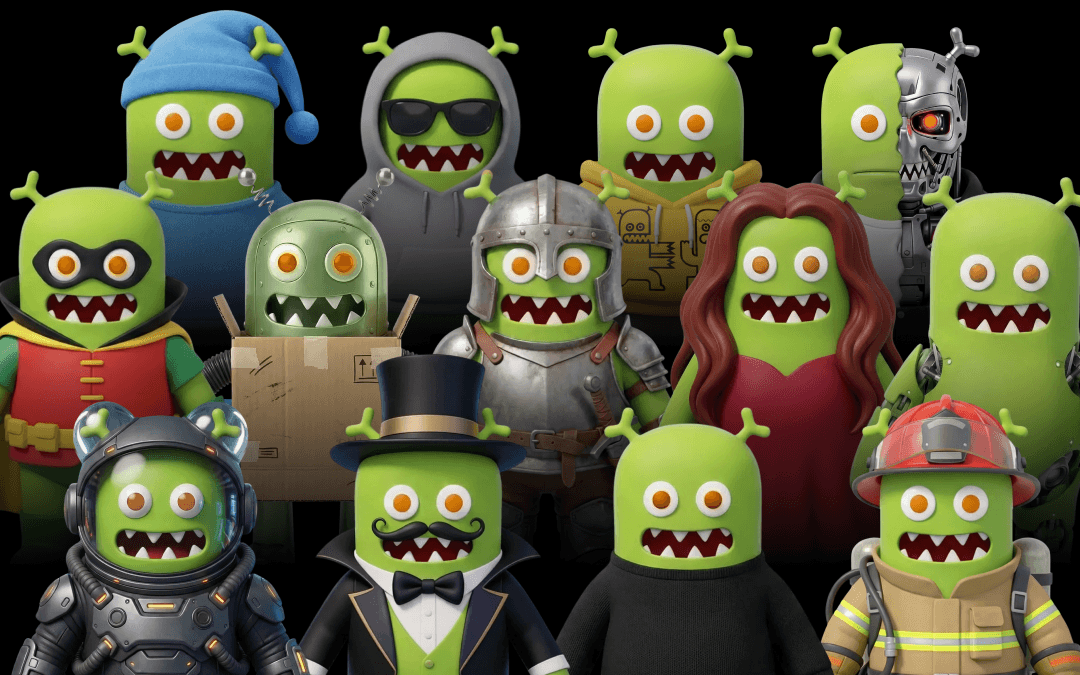
Evil Martians is a development shop with a 20-year history. Their mascot, a friendly green alien running after a human, is cherished by their engineering audience of 500,000 readers and recognized by millions of open source users.
After years of working with human illustrators, and an attempt at building their own AI illustration pipeline, they came to us with a question:
We write two articles per week, each has a different author. Each article needs an image. Folks are very particular about preserving accuracy. Is it possible to create a process that retains our recognizable characters but costs under $100 a pop?
We got to work. For Evil Martians, KOJI built an AI illustration pipeline with a human in the loop, and it saves them about $20,000 a year.
The problem KOJI was brought in to solve
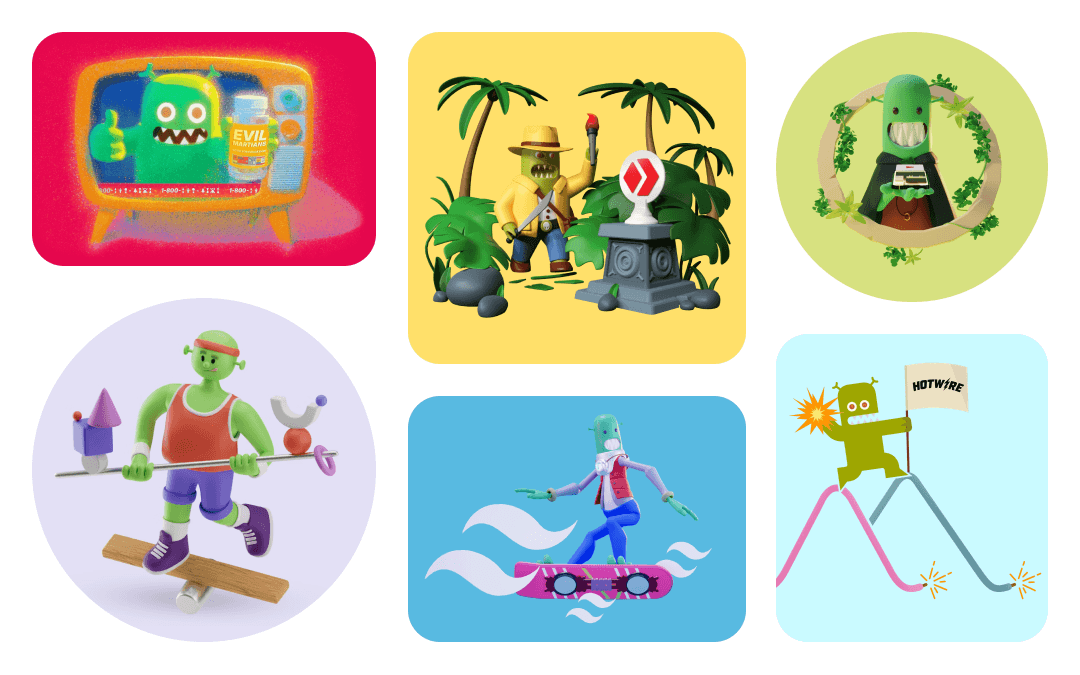
Evil Martians used to source blog illustrations from a rotating bench of contractors. A typical illustration cost about $200, a multi-character scene closer to $300, and turnaround ran anywhere from two days to two weeks. The blog publishes twice a week, so the budget reached roughly $30,000 a year.
The harder problem was consistency. That mascot drifted from one illustrator to the next, and over a year of posts the visual language quietly mutated. Authors often wanted changes on the first pass, and a single illustration could bounce back and forth for days.
AI on its own couldn't close the gap
The team tried to automate the whole thing, and they got most of the way there. Through early 2025 they ran Midjourney, Recraft, and Nano Banana, with Flora Fauna for background removal and Topaz for upscaling. The demos looked great, and so did the first lucky outputs. The last ten percent never closed.
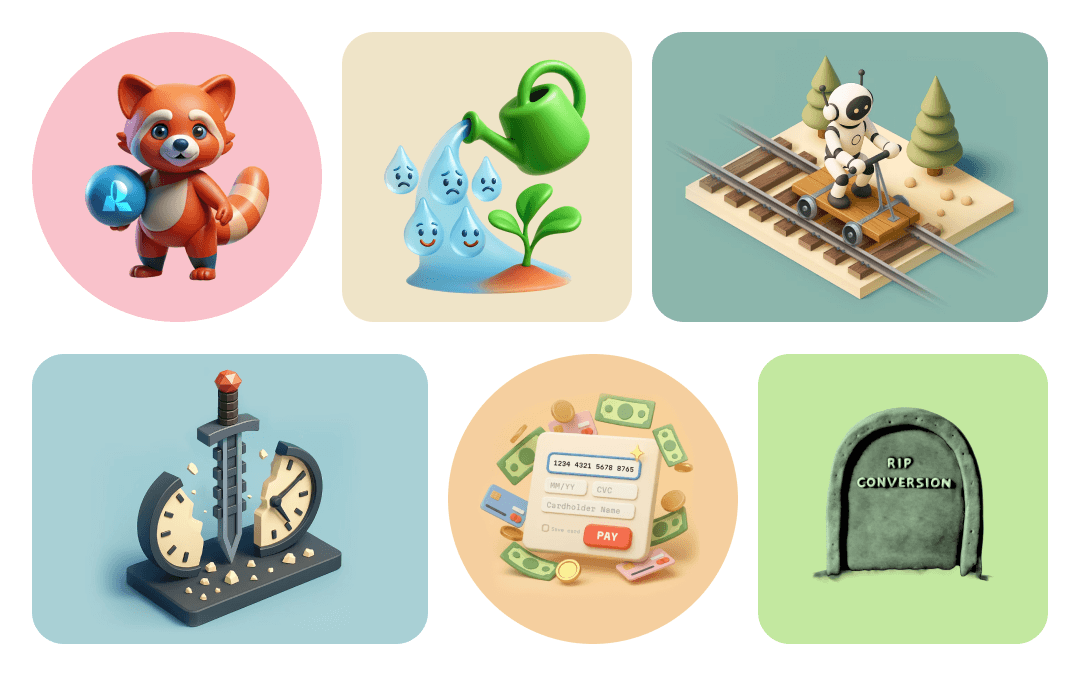
The mascot held up in a single shot and fell apart across a series. Small details broke on a second look, with garbled text, odd shadows, and hallucinations creeping in. The illustrations ship at 1200×1000 pixels with transparent backgrounds, and the models defaulted to opaque output at one aspect ratio, so every asset needed cleanup by hand. They moved from the idea of executing scenarios with the character, and optimized for making simple isometric illustrations. The costs migrated from hiring contractors to the invisible leakage of team hours, about eight per image, which worked out to $600–700 of internal time spent fixing slop in Photoshop and left the team burnt to a crisp. That's when they brought the work to KOJI.
How KOJI takes care of it
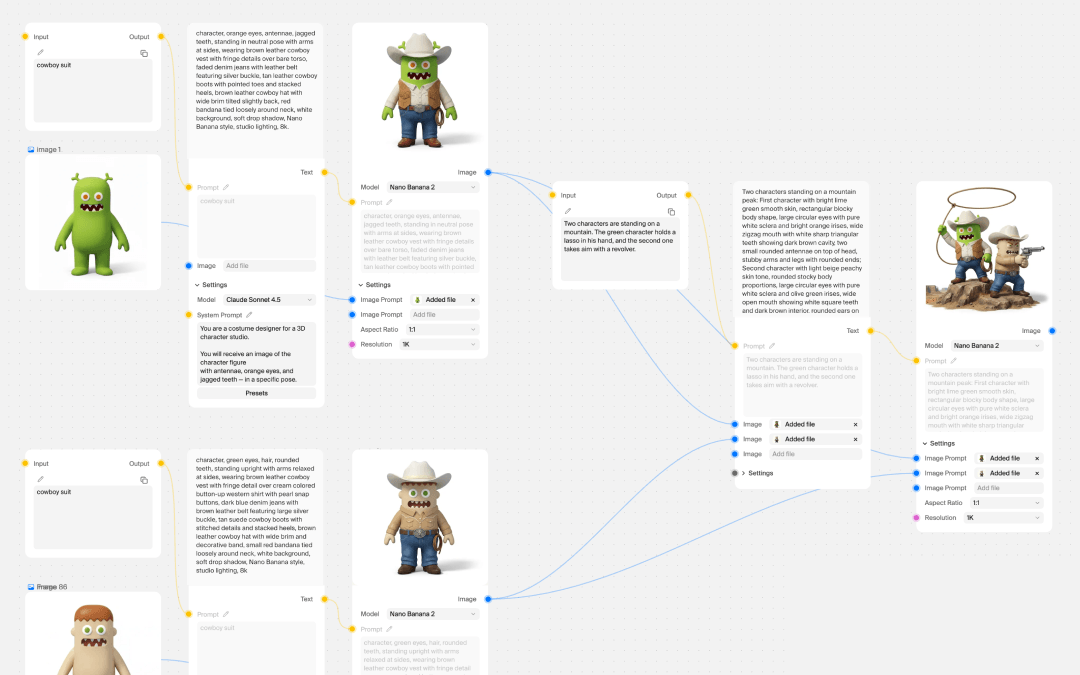
KOJI rebuilt the pipeline around one idea we call the last human mile. AI generates the volume, and a human illustrator owns the finish, which means the cleanup, the shadows, and the small things models still get wrong.
First, KOJI did the prep that makes consistency possible. We started from the strongest existing illustrations of the mascot, and by experimenting with prompts, we generated a master reference of the alien. It pins down his anatomy, the ears, teeth, eyes, and body, along with his textures, the gloss and the color, and we built the same kind of reference for the human he chases.
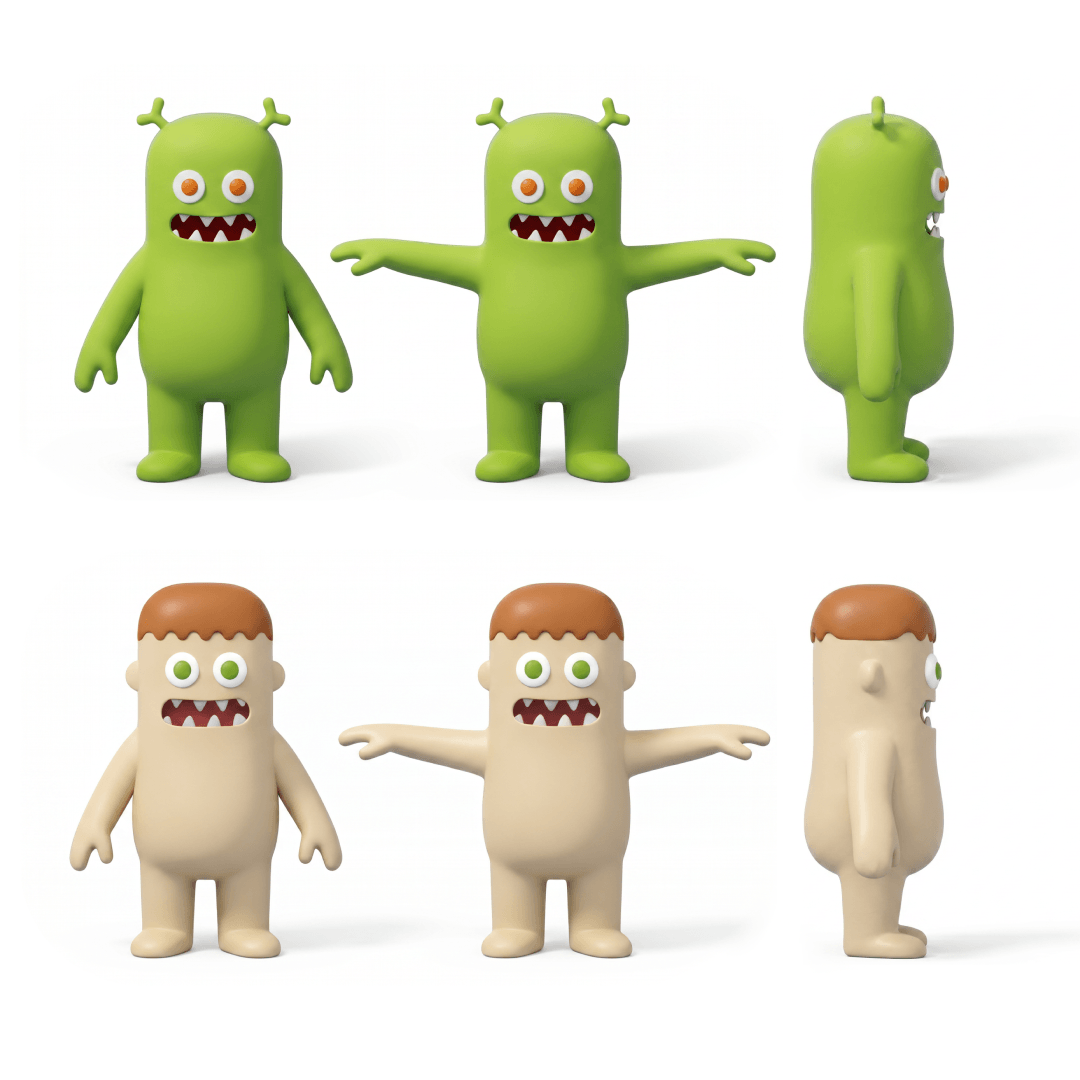
A few more references grew out of the work, like the alien in a yellow hoodie representing Evil Martians merch. With those locked in, the character holds its shape and personality from one illustration to the next, and we can drop it into almost any scene the author imagines.
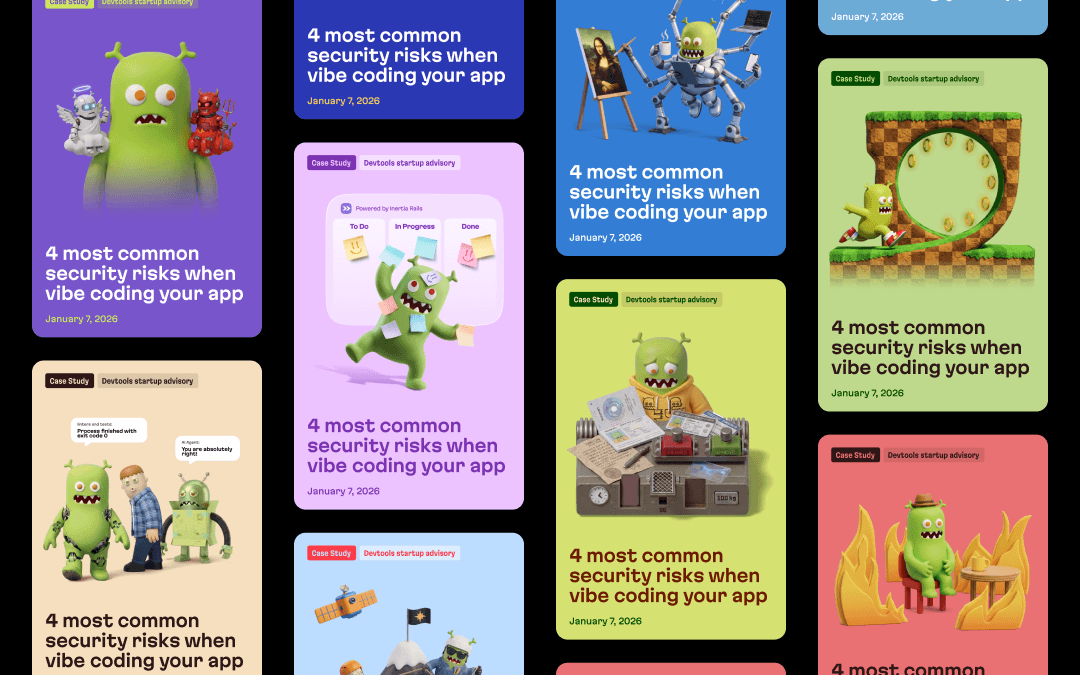
Once the AI foundation was built, the client built the process. The author and editor send us a one-line visual thesis with any references, because that part needs editorial taste and a read on what the post argues. We take it from there. We generate the options, we pick the strongest direction, and our illustrator does the cleanup. We send a first draft, the author gets a 24-hour window to flag anything against the brief, and we deliver the final version before it ships. The team owns the brand at both ends, and KOJI owns everything in between, including the midnight Photoshop work they used to do themselves.
What changed for the team
A single illustration now costs $100, down from as much as $300 with contractors, and well below the $600–700 the AI-only attempts were quietly costing in internal time. At twice a week, that's about $10,400 a year against the roughly $30,000 the blog used to spend, so KOJI takes close to $20,000 off the annual illustration bill. The mascot stays consistent across the series, and the small details hold up when you look twice. The team has stopped fixing slop at midnight, and because each illustration costs less, they now order two to three times more of them.
| approach | cost per illustration | team time | consistency |
|---|---|---|---|
| contract illustrators | $200-300 | 1-2 hours | Medium |
| ai on its own | ~$20 in tools,plus $600-700 in the team’s time | 8+ hours | Inconsistent |
| koji | $100 | 1-2 hours | consistent |
Why this works beyond a blog
The illustration pipeline is one example of a broader pattern. For almost any AI-assisted creative work, there's a last mile the model can't close on its own, and that's where craft, taste, and brand live. There's a first human mile too, where someone decides what the work should say. KOJI builds the AI pipeline and keeps a human on both ends, so the output still looks like your brand a year from now, with someone who owns the taste deciding what ships.
Results
$20K Annual Savings on Blog Illustrations
$100
cost per illustration
1,5 hours
team time
∞ consistency
Pasha Dergachev
If your team produces
creatives at volume and feel the squeeze between cost, speed, and brand consistency, KOJI can help. Book a 15-minute call.